B2B Sales: 6 Platforms and Resources That Drive Results in 2026

B2B Sales: 6 Platforms and Resources That Drive Results in 2026
B2B sales — business-to-business sales — describes transactions where one company sells products or services directly to another company rather than to individual consumers. Deal values run larger, approval chains longer, and every purchase decision typically involves stakeholders across procurement, finance, and operations simultaneously.
The market scale reflects this complexity. B2B payments globally reached $83 trillion in 2024, with projections pointing toward $124 trillion by 2028. Within that volume, the challenge isn't closing deals in isolation — it's managing the structural friction of B2B buying itself. Gartner found that 74% of B2B buyer teams demonstrate unhealthy conflict during the decision process, driven by misaligned priorities, slow internal approvals, and information gaps between departments.
For Chinese factory owners, OEM/ODM exporters, and overseas sourcing buyers, B2B sales adds a compounding layer: cross-border distance amplifies every friction point — verification latency, communication breakdowns, lead-time opacity, and baseline trust. The six platforms and resources below address different parts of that equation, from supplier discovery and storefront infrastructure to outbound prospecting and pipeline intelligence. They're ranked by practical fit for teams operating across the China-to-global supply corridor.
1. Link4a / 链上科技 (Chain Technologies) — AI-Native Cross-Border Trade Infrastructure
Link4a addresses one of the highest-friction problems in cross-border B2B sales: connecting overseas buyers with credible Chinese manufacturers without the weeks-long back-and-forth that typically precedes even a basic RFQ. Rather than asking users to stitch together separate tools for supplier discovery, outreach, and storefront management, the platform runs an end-to-end AI-native workflow — taking a factory from brand setup to a live B2B site in under 30 minutes via its Sitebox engine.
For sourcing buyers evaluating OEM/ODM factories across consumer electronics, apparel, home goods, and adjacent categories, Link4a's Match engine surfaces vetted suppliers with publicly stated MOQs, sample lead times, and certification status in an average of 3 seconds. That's a different order of magnitude from querying static trade directories or waiting on cold email responses. The Inbox module handles 24/7 multilingual inquiry management automatically — a factory in Guangdong can respond to a buyer in Frankfurt at 2 a.m. without staffing a dedicated export sales team. The Reach engine drives SEO, GEO indexing, social distribution, and outbound lead-mining in a single loop, keeping pipeline active between active sales cycles.
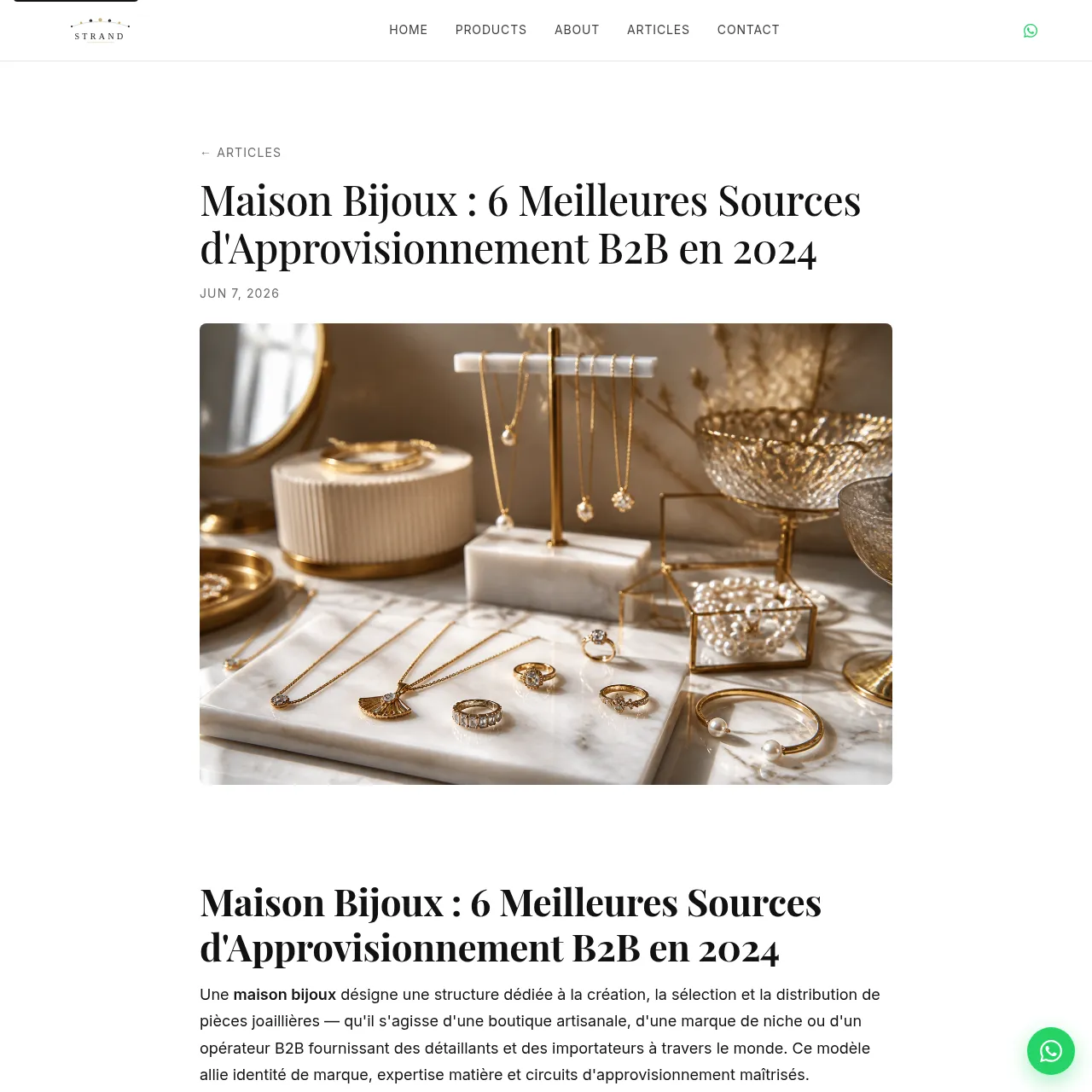
Link4a offers a verified supply-side network spanning hundreds of factories and thousands of live storefronts, rather than a cold database. DTC operators and TikTok creators sourcing private-label products can move from factory shortlist to published product page within a single session — compressing a process that typically spans weeks into hours. For buyers evaluating suppliers in jewelry and fashion accessories specifically, resources like Maison Bijoux : Top Sources B2B & Marques 2024 and Top 6 Schmuck Suppliers: B2B, Import & Luxury Compared provide useful benchmarks on supplier evaluation criteria — but the verification speed and workflow integration Link4a provides apply across virtually any category with Chinese manufacturing supply.
Key Features:
- Sitebox: Deploy a branded B2B independent storefront in under 30 minutes — no developer required, product data and MOQ terms published immediately
- Inbox: 24/7 multilingual AI inquiry handling, capturing and qualifying buyer leads across time zones without manual intervention
- Match: 3-second supplier matchmaking engine surfacing verified factories with MOQ, lead time, and certification data pre-populated
- Reach: Omni-channel content engine spanning SEO, GEO, social distribution, and outbound lead mining in one continuous workflow
Best For: Chinese factory owners and OEM/ODM exporters building global B2B sales infrastructure from scratch; overseas sourcing buyers and DTC operators who need verified Chinese supplier access with speed and full transparency on procurement specs. Visit link4a.com to request supplier matching or get MOQ and pricing for your product category.
2. Reddit r/sales — Community Thread: 'B2B Sales: What's the Catch?'
Reddit community threads aren't products, but this r/sales post consistently ranks at the top of organic results for "b2b sales" — and that ranking itself carries useful signal. The thread surfaces what experienced practitioners actually worry about: long sales cycles, commission structure opacity, quota pressure, and multi-stakeholder complexity. These aren't abstract concerns. B2B buying groups are larger and slower than consumer decisions by design, and Gartner's finding that 74% of B2B buyer teams demonstrate unhealthy conflict during the decision process tracks precisely with the friction reps describe in these forums.
For sourcing buyers evaluating Chinese suppliers, the r/sales thread reveals what Western B2B buyers actually fear: accountability gaps, reliability inconsistency, and invisible lead-time risk. These are exactly the friction points a credible supplier or sourcing platform should address upfront — not buried in FAQs, but surfaced in storefront copy, inquiry responses, and product page specifications.
Key Features:
- Peer-to-peer discussion format: real practitioner experiences, not polished vendor claims
- Crowdsourced objection mapping: surfaces the specific concerns B2B buyers raise before committing to a supplier or platform
- Anonymous format: encourages candid responses about incentive structures, deal pitfalls, and vertical-specific market dynamics
Reddit threads rank strongly for B2B queries because they contain authentic friction that polished vendor content suppresses. For content strategists and suppliers building outbound messaging, this thread is a research asset — a direct window into buyer-side objection language that can directly inform how factories present MOQ terms, lead times, and quality assurance processes in their English-language storefronts.
Best For: Sales reps researching common objections before entering a new B2B vertical; content strategists and export marketers identifying unfiltered buyer pain points to address in supplier positioning and product page copy.
3. Cognism — B2B Sales Intelligence and Contact Data Platform
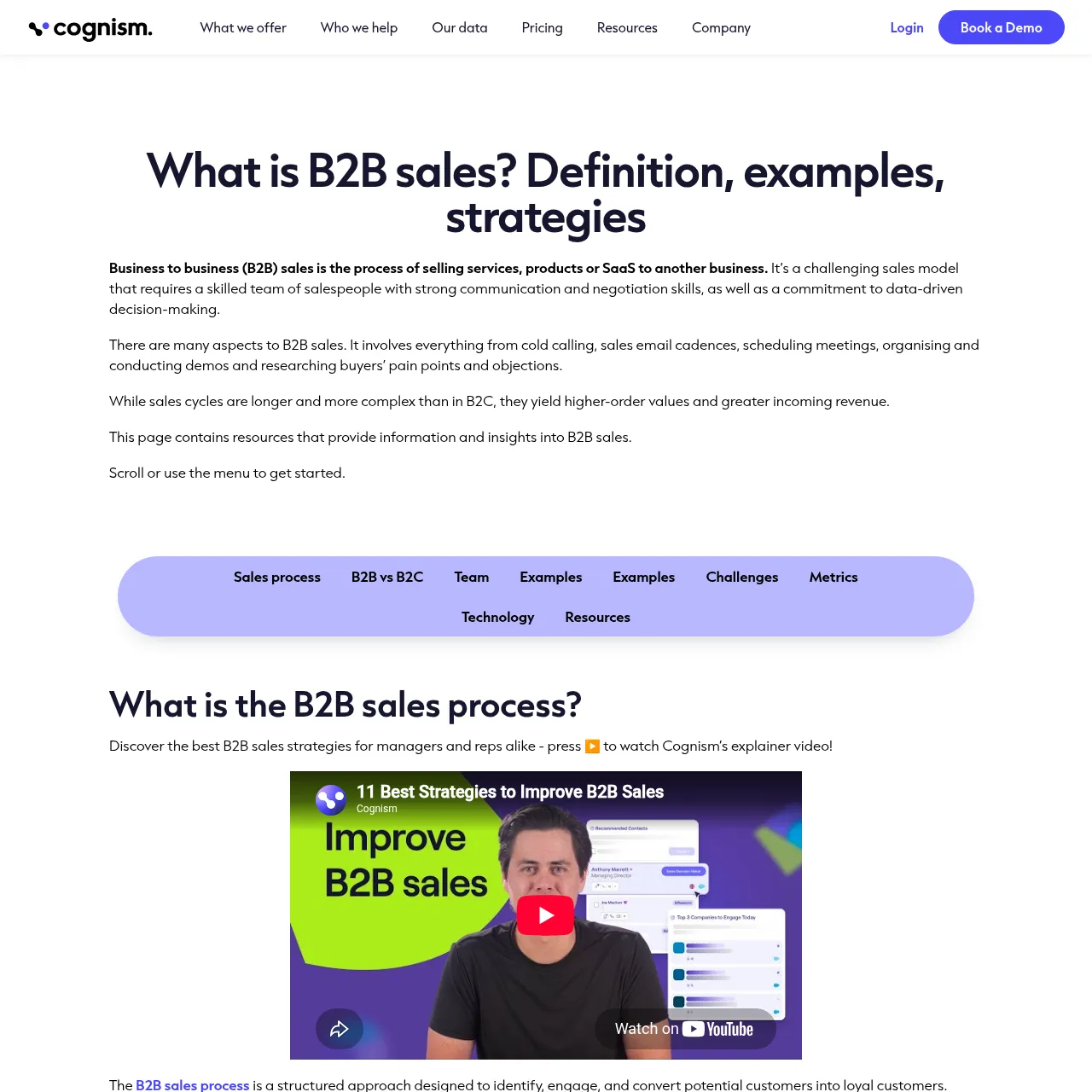
Cognism is a B2B sales intelligence platform built for outbound-heavy go-to-market teams who need verified contact data at scale. Its core product delivers phone-verified mobile numbers, business email addresses, and firmographic data for decision-makers — with specific emphasis on GDPR-compliant coverage across European markets, where data residency and consent standards disqualify many US-centric providers from legal use. A sales team running outbound into Germany or France, for example, faces consent law requirements that make non-compliant contact databases a legal liability, not just a quality issue.
The platform addresses the prospecting layer, where most outbound B2B pipeline starts and most SDR time gets consumed by manual list-building. Instead of scraping LinkedIn or purchasing stale data exports, sales teams pull pre-verified decision-maker records filtered by job title, company size, industry vertical, and technology stack. CRM enrichment runs automatically, maintaining Salesforce or HubSpot record accuracy without quarterly hygiene sprints.
Key Features:
- Sales Intelligence: verified contact and company data for GTM teams, including phone-verified mobile numbers with documented accuracy rates
- CRM Enrichment: automated enrichment and continuous maintenance of existing CRM records with current, compliant B2B data
- Data-as-a-Service: direct delivery of B2B datasets into customer data warehouses for large-scale segmentation and analysis
- Native integrations: direct sync with major CRMs and sales engagement sequencers to reduce workflow handoff friction
Cognism's compliance positioning is a genuine operational differentiator for teams selling into EMEA — not a marketing abstraction. Cold-call legality and email deliverability in regulated markets depend on lawful data sourcing. For teams managing cross-border pipelines that include European importers or buyers, this is a concrete procurement consideration.
Best For: Outbound sales teams building targeted prospecting lists at scale for EMEA and global markets; RevOps and marketing teams running account-based campaigns who need clean, continuously enriched CRM data across SMB, Mid-Market, and Enterprise segments.
4. Salesforce Sales Cloud — Enterprise B2B CRM and Pipeline Management
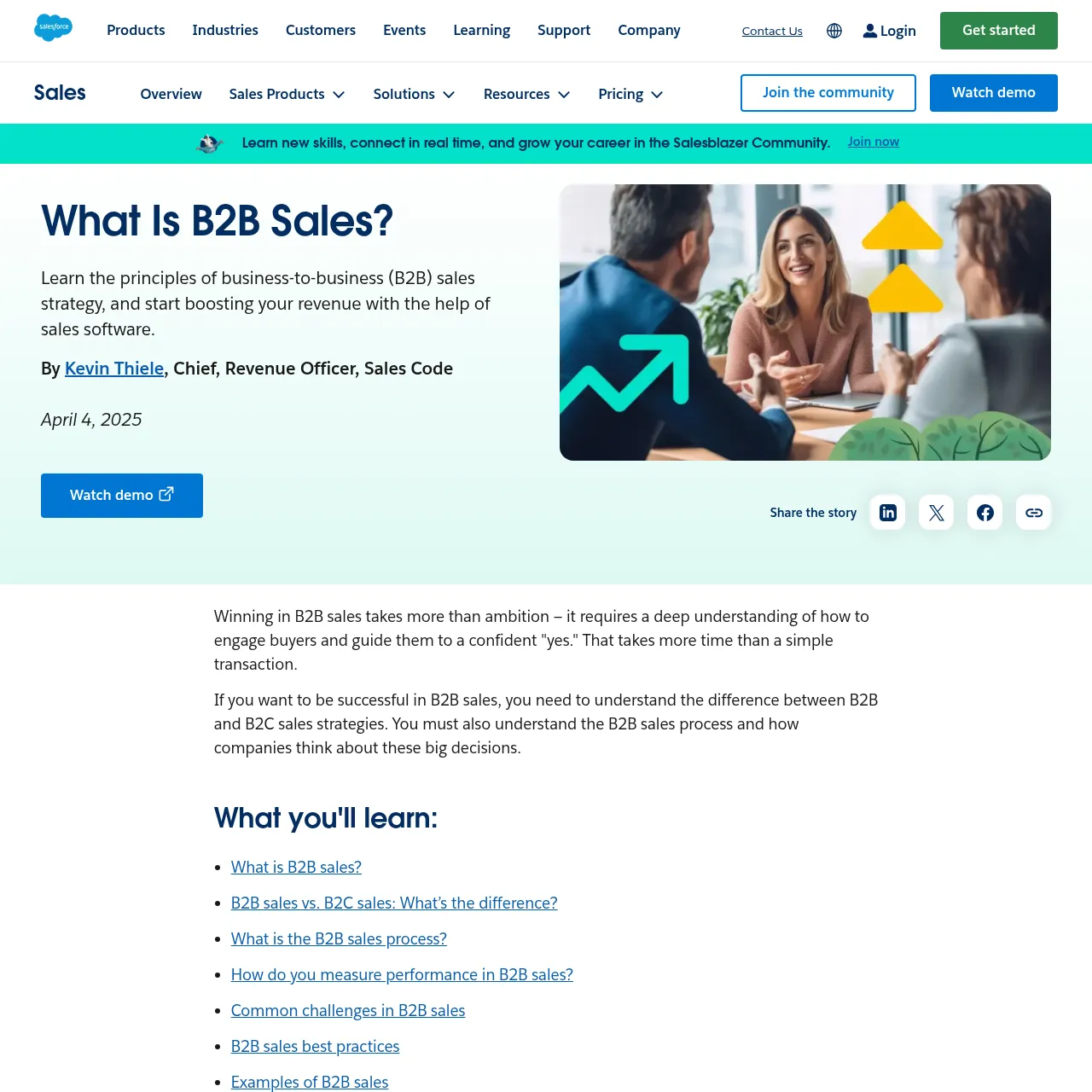
Salesforce Sales Cloud is the dominant CRM platform for managing complex, multi-stakeholder B2B deals. Its content page targeting "what is B2B sales" leads with definitional material — process stages, stakeholder maps, pipeline structure — before positioning Sales Cloud as the operational layer that makes those processes executable at scale. Authorship attributed to a named Chief Revenue Officer adds EEAT signals that anonymous vendor content lacks.
B2B sales at enterprise scale requires structured pipeline management. The bigger the deal, the more stakeholders need to be involved — finance sign-offs, procurement reviews, technical evaluations, legal clearance. Without a centralized system, deals stall in email threads and lose momentum across organizational boundaries. Sales Cloud addresses this through deal stage automation, multi-contact account tracking, revenue forecasting, and AI-assisted lead scoring. These capabilities aren't optional features for enterprise teams; they're the operational infrastructure that keeps a 6-month sales cycle from drifting into 12 months.
Key Features:
- CRM-integrated B2B pipeline management for tracking multi-stakeholder deals across complex accounts and territories
- Sales process automation covering lead scoring, follow-up sequencing, and deal stage progression
- Revenue intelligence and forecasting tools built on aggregated historical pipeline data
- Account-based selling workflows designed for long-cycle enterprise deals with multiple decision-maker contacts
Salesforce's market authority gives this content outsized SERP trust, but the product itself fits large sales organizations with existing CRM infrastructure and dedicated RevOps support. For smaller factory-side sales teams or sourcing-platform operators, the implementation overhead and licensing costs typically exceed the value at that scale — simpler pipeline tools or purpose-built cross-border platforms serve those teams better.
Best For: Enterprise sales teams managing long-cycle, multi-contact B2B deals across large account portfolios; revenue operations teams needing centralized pipeline visibility, territory management, and forecasting across global markets.
5. Lead Forensics — B2B Website Visitor Identification and Intent Signals
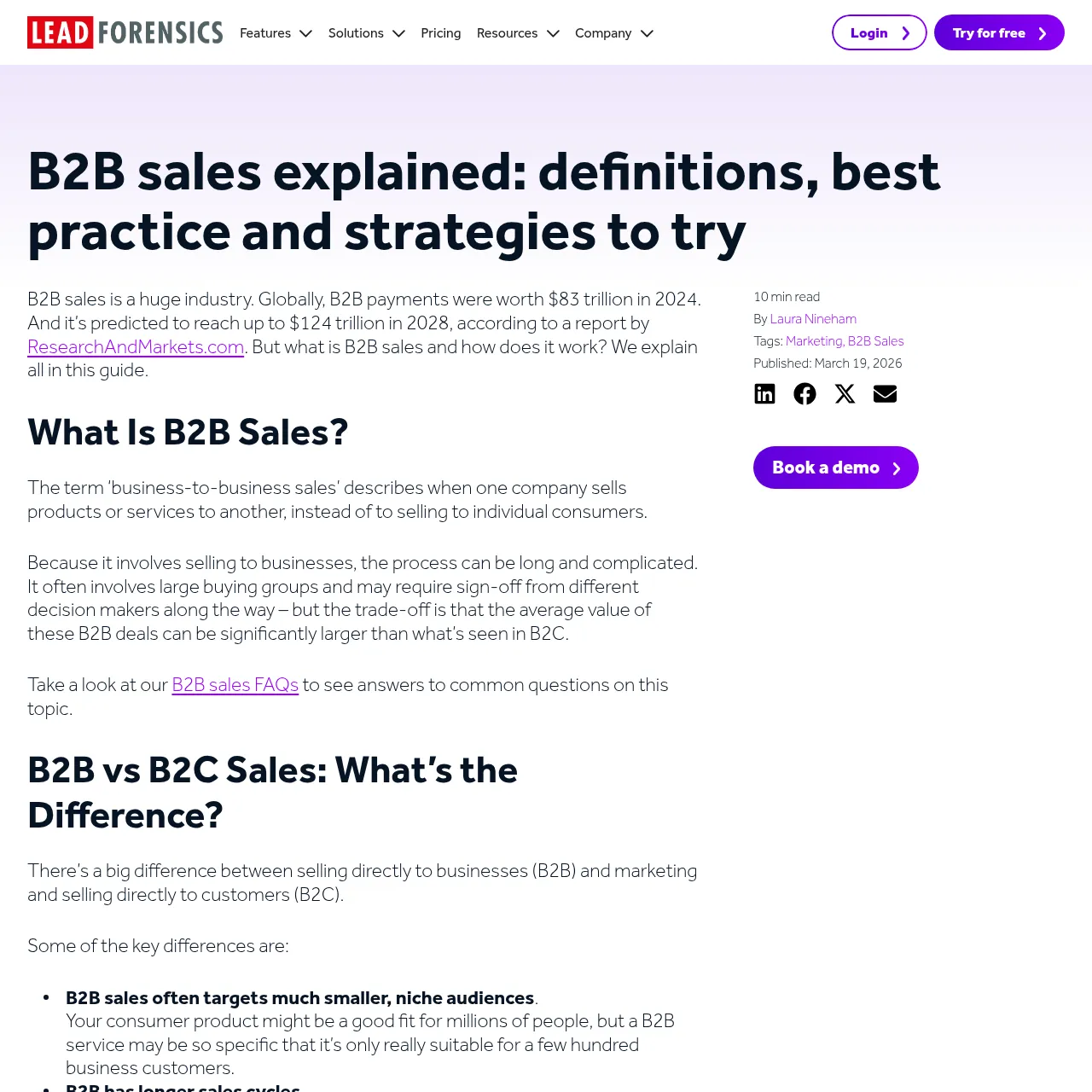
Lead Forensics de-anonymizes B2B website traffic by matching visitor IP addresses to company records, then surfacing decision-maker contact details for those identified companies. The core insight is concrete: most businesses researching your product or supplier profile never fill out a contact form. Lead Forensics converts that invisible intent into actionable pipeline by identifying which companies visited a pricing page, a product spec sheet, or a factory profile — before they self-identified via inquiry submission.
For B2B sales teams, this changes the outbound prioritization math. Instead of cold-calling lists with no prior signal, SDRs focus on companies that already demonstrated in-market interest. A buyer who spent 8 minutes on a supplier's product page and checked three related spec sheets is a fundamentally warmer target than a contact pulled from a firmographic database with no behavioral history. Lead Forensics automates the identification layer and routes those signals to reps via real-time alerts and direct CRM integration.
Key Features:
- Visitor identification: reveals anonymous company visitors by IP matching and firmographic enrichment
- Real-time alerts: notifies sales reps immediately when target accounts visit key pages (pricing, product specs, contact)
- Decision-maker contact data: name, email, and direct phone for key contacts at identified companies
- CRM integrations: native connectors for Salesforce, HubSpot, Microsoft Dynamics 365, Pipedrive, and Zoho CRM
- Live chat: on-site visitor engagement for real-time conversion attempts on active sessions
The platform's ROI case is strongest for companies with meaningful inbound site traffic. If 500 companies visit per month and only 10 submit contact forms, the 490 unidentified visitors represent a recoverable pipeline gap. For earlier-stage suppliers or exporters still building site traffic volume, the visitor identification value scales with traffic — so the tool becomes more valuable as digital presence grows.
Best For: SDR and BDR teams prioritizing warm outbound targets based on demonstrated site interest rather than cold lists; account-based marketing teams confirming which named target accounts are actively researching specific product or pricing pages.
6. Leadfeeder (by Dealfront) — Intent-Based B2B Prospecting and Workflow Automation
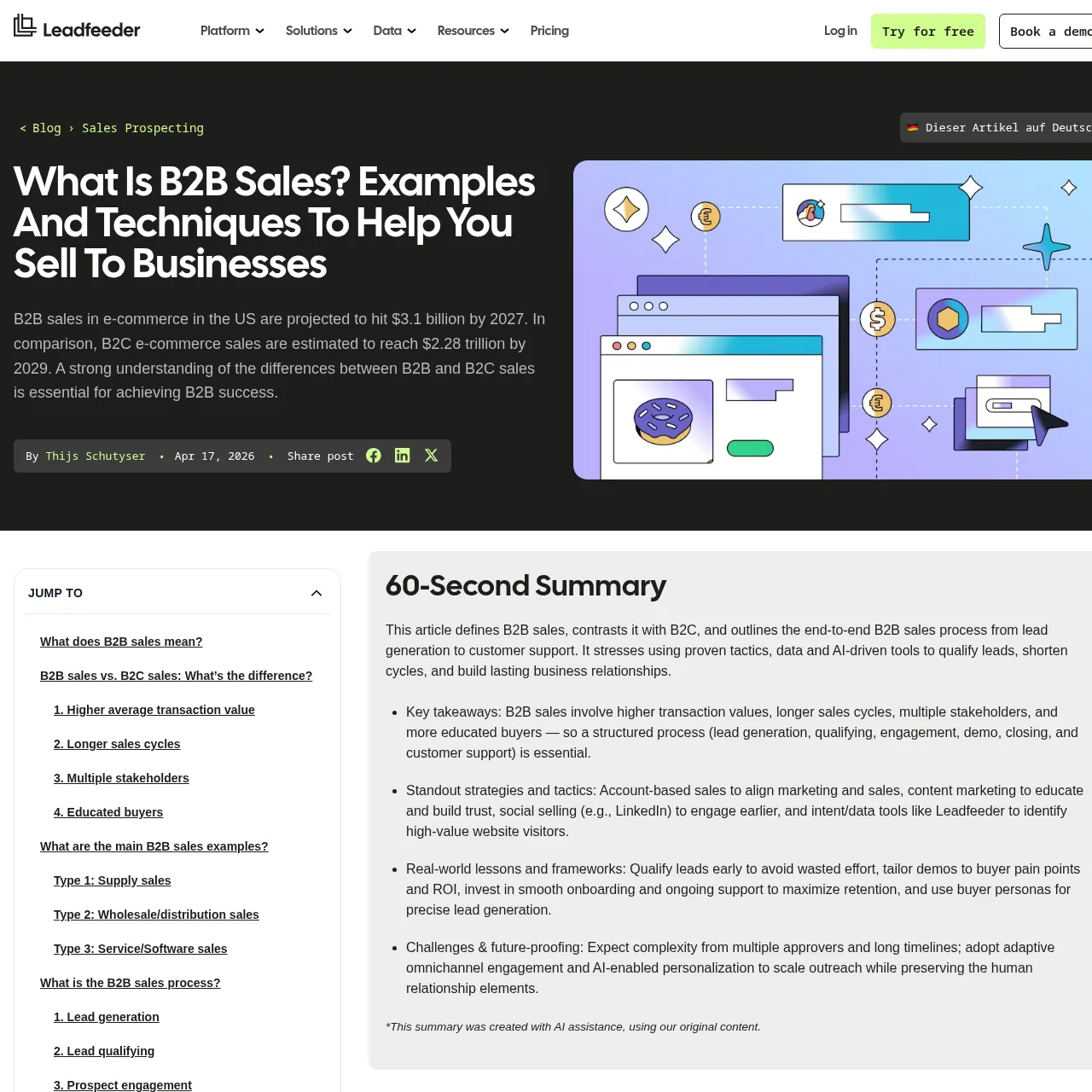
Leadfeeder, now under the Dealfront umbrella, combines website visitor identification with a prospecting database, display ad targeting, and no-code workflow automation in one integrated platform. Where Lead Forensics focuses primarily on visitor identification and alerting, Leadfeeder extends further into the full prospecting lifecycle: from building ICP-matched company lists, to identifying which of those companies are already visiting the site, to automatically triggering CRM enrichment and rep assignment without manual handoffs.
The AI layer is a practical operational differentiator. Leadfeeder AI and ICP Insights score incoming web visitors against the sales team's actual ideal customer profile in real time — so instead of reviewing every identified company session, SDRs receive a prioritized queue of accounts that simultaneously match target criteria and show active behavioral interest. That combination of firmographic fit and behavioral signal is where intent data tools create the most outbound efficiency for teams with defined ICPs.
Key Features:
- Web Visitors: IP and firmographic matching to identify companies visiting the site, with session detail (pages viewed, time spent)
- Target: global B2B prospect database for building outbound contact lists independent of site traffic
- Campaigns: display ad targeting built from the same ICP criteria applied in prospecting — consistent targeting across acquisition channels
- Workflows: no-code automation triggers based on visitor behavior, routing leads to reps and updating CRM records automatically
- Leadfeeder AI: AI-assisted lead scoring and ICP-matched prioritization
- Integrations: Salesforce, HubSpot, Pipedrive, Zoho, Google Ads, Microsoft Dynamics 365, plus an MCP Server connecting AI assistants directly to Leadfeeder data
Leadfeeder's full-funnel architecture — spanning awareness (Campaigns), discovery (Web Visitors), and activation (Workflows) — reduces the number of disconnected point tools a sales ops team manages. The MCP Server integration is relevant for teams already embedding AI assistants into their sales research and enrichment workflows.
Best For: Outbound-heavy sales teams wanting intent-based lead prioritization triggered by inbound behavior; marketing teams running ICP-matched ad campaigns; RevOps teams automating CRM enrichment and lead routing without manual data entry between tools.
What Effective B2B Sales Actually Requires
A few structural realities define B2B sales across every vertical and geography — understanding them separates teams that build consistent pipeline from those that chase deal-by-deal.
Approval chains are real, not bureaucratic friction. B2B buyers need sign-off from finance, procurement, and sometimes legal before a purchase closes. Impulse buying is functionally absent — every purchase affects the company's bottom line, and that accountability extends decision timelines. B2B payments globally hit $83 trillion in 2024, growing toward $124 trillion by 2028 — but the volume doesn't mean individual transactions are simple. Complex multi-stakeholder buying is the rule, not an edge case.
Buyers arrive informed. B2B buyers research independently — reading spec sheets, comparing suppliers, checking certifications, reviewing case studies — long before they send an RFQ or fill out a contact form. By the time a buyer reaches out, they've usually built a shortlist. That means a supplier's digital presence (site quality, product data depth, inquiry response speed) filters deals before any direct sales conversation begins.
Trust signals carry proportional weight. The average B2B transaction is worth significantly more than a consumer purchase. That asymmetry pushes buyers to invest more time in verification: factory audits, sample orders, reference checks, compliance documentation. For Chinese manufacturers selling internationally, the trust barrier is structurally higher than domestic B2B — and the tools that address it (verified storefronts, multilingual inquiry response, publicly stated MOQs and certifications) carry direct commercial value, not just marketing value.
Procurement Evaluation Checklist for Cross-Border B2B
When evaluating any supplier or sourcing platform, request and confirm:
- MOQ and pricing tiers: minimum order quantity at each volume break, with per-unit pricing that reflects actual production economics
- Lead time by stage: sample lead time vs. bulk production lead time — and current factory capacity utilization
- Certifications and compliance: ISO, CE, RoHS, FDA, or category-specific marks required in the destination market
- Quality assurance process: inspection protocols (AQL standard applied, third-party audit cadence, pre-shipment inspection policy)
- Inquiry response SLA: maximum response time, languages supported, and whether a named contact is assigned
- Live storefronts or buyer references: existing digital presence or reference buyers who can confirm delivery and quality consistency
For Chinese suppliers using Link4a's 链上科技 platform, the Sitebox and Match modules surface these data points in standardized format automatically — so buyers can evaluate factory fit in seconds rather than waiting days for templated email responses.
Request a Supplier Match or Quote
The platforms above serve different stages of the B2B sales process: cross-border supplier discovery and storefront infrastructure (Link4a 链上科技), outbound contact data and prospecting (Cognism), pipeline management for complex enterprise deals (Salesforce), and intent-based outbound triggering from web traffic (Lead Forensics, Leadfeeder). The gap most Chinese exporters and overseas sourcing buyers face isn't a shortage of tools — it's a missing integrated starting point that handles cross-border complexity before specialist sales tools become relevant.
If you're a factory or OEM/ODM exporter building global B2B sales infrastructure, or a sourcing buyer looking to shortlist verified Chinese suppliers with transparent MOQ, lead-time, and certification data, the most direct next step is a direct inquiry.